Inflammation: Chronic vs. Acute and Lifestyle Choices

Inflammation is the body’s natural response to injury, infection, or irritation. When something harmful occurs, the immune system sends signals that increase blood flow and activate protective cells in the affected area. This leads to common signs like redness, warmth, swelling, and discomfort. While it can feel unpleasant, this process is necessary for healing and helps the body recover from damage.
There are two main types of inflammation: acute and chronic. Acute inflammation happens quickly and usually resolves within a short period once the issue is addressed, such as after a cut or an infection. Chronic inflammation, on the other hand, develops more slowly and can last for months or even years. It often goes unnoticed but can place ongoing strain on the body and is linked to a range of long-term health conditions.
Daily habits have a meaningful impact on how the body manages inflammation. All meals should be centered on colorful, phytonutrient-rich items such as berries, dark leafy greens, cruciferous vegetables, and tomatoes, and spices like turmeric and ginger, which can help regulate inflammatory pathways. Include sources of omega-3 fatty acids, such as oily fish, flaxseeds, and walnuts.
Focus on physical activities that support circulation and lymphatic flow, such as brisk walking, yoga, swimming, and resistance training, which may help clear metabolic waste and maintain immune balance.
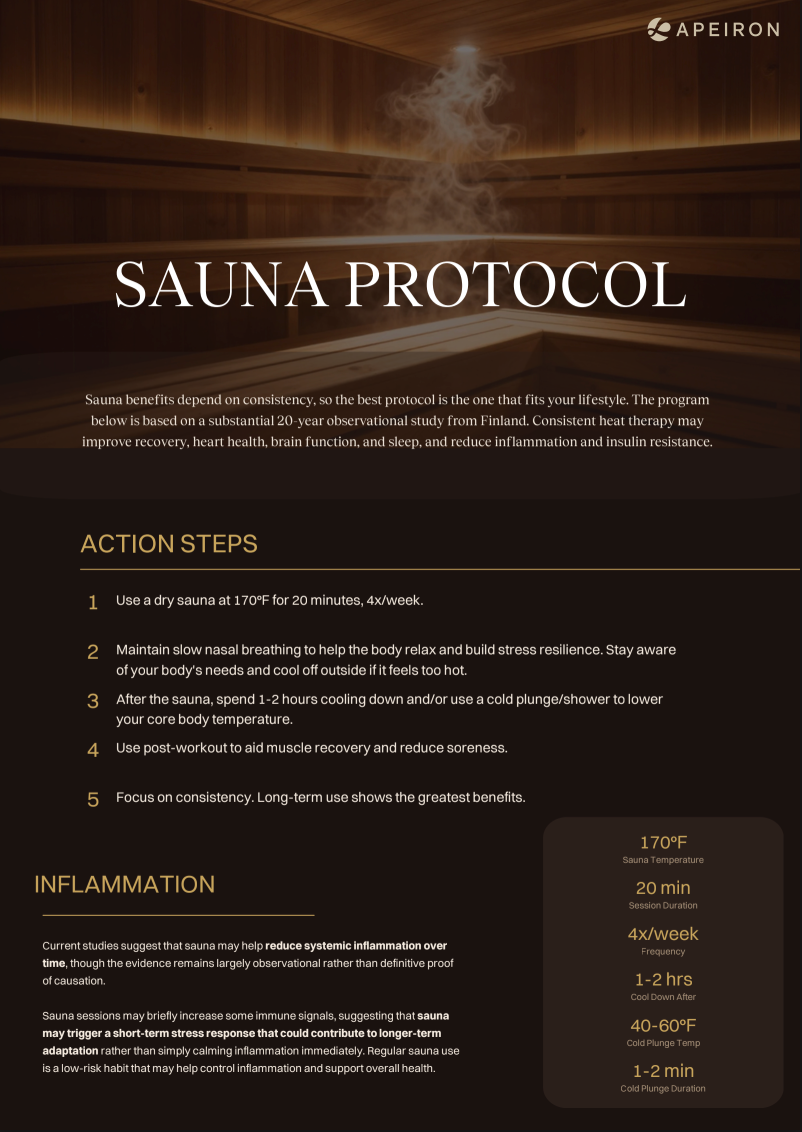
Incorporate rejuvenation practices that reduce stress and chronic high cortisol, such as breathing exercises, meditation, and periodic recovery strategies like stretching, sauna use, or massage, to support overall physiological function.
And most importantly, build a consistent sleep schedule that allows you enough time in bed to rest, reset, and get 7-9 hours of sleep. We offer a Cortisol and Melatonin testing program, providing insight into the connection between your sleep and stress. Let your Client Advocate know if you’d like to get yours tested.


Comments